The Weekly Planner Setup That Survives Real Life
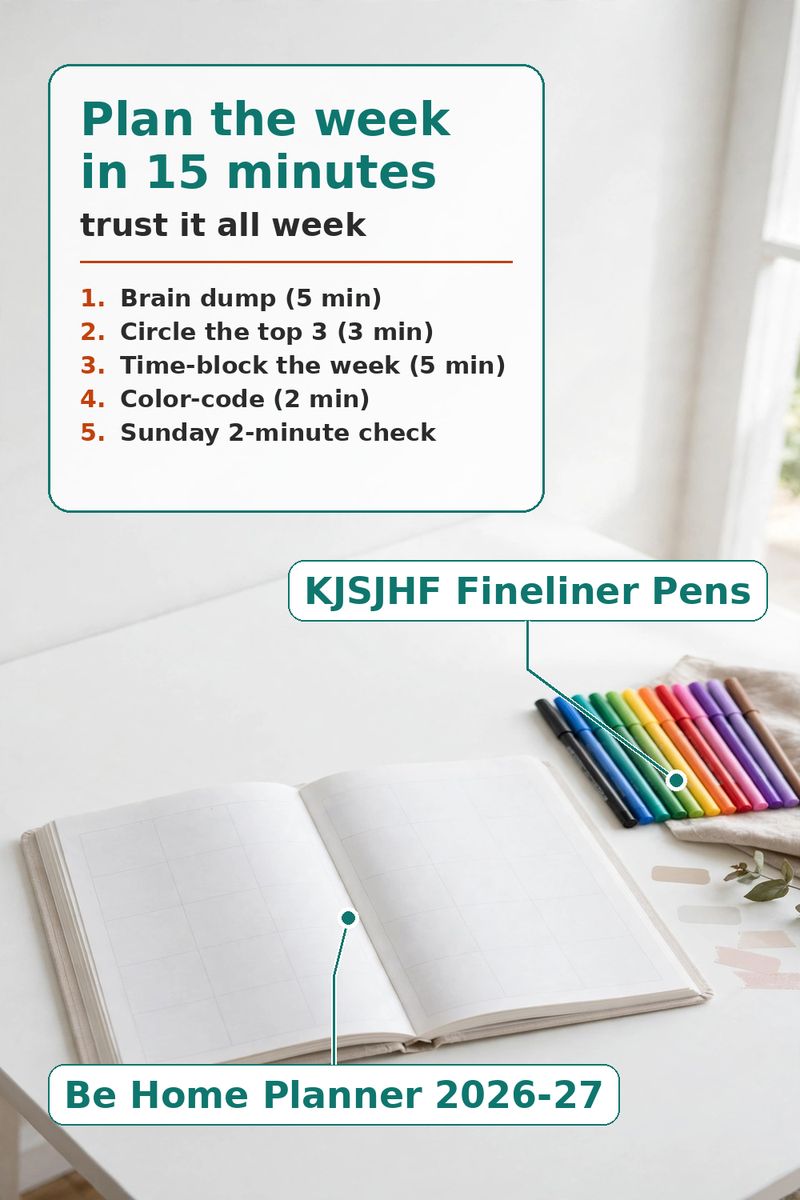
The promise: A 15-minute weekly planning setup - brain dump, top 3, time blocks - in any paper planner
A 15-minute weekly planning setup that actually survives a real week: brain dump, top 3, time blocks — in any paper planner. The kit: a weekly planner with stickers and tabs so every week starts clean, a 12-color fineliner pen set for writing small but readable, vintage sticky notes for the brain dump before anything commits to ink, a 6-color highlighter set for color-coding time blocks at a glance, and a gold-foil washi-and-sticker set to mark the week's anchors. The routine: 5 minutes brain-dumping everything loose in your head onto sticky notes, 3 minutes circling your top 3 must-dos, 5 minutes time-blocking the days around them, 2 minutes color-coding the blocks. Then one 2-minute Sunday check to carry anything unfinished forward. No digital setup, no app to learn, no elaborate monthly spreads — just a repeatable Sunday ritual that turns a cluttered planner into a week you can trust.
How this post keeps its promise
Run this every Sunday (or the evening before your week starts). Set a 15-minute timer and follow the five steps — it is a system, not a decoration session.
- Step 1 — Brain dump (5 min): Grab the sticky notes and write one loose task, worry, appointment, or idea per note. Get everything out of your head — the grocery run, the dentist call, the project step, the bill due. Don't organize yet; the point is an empty head, not a pretty page.
- Step 2 — Circle the top 3 (3 min): Look at the notes and pick the three things that must move this week. Flag them with a gold-foil sticker each. These three get first claim on your time — everything else fills in around them.
- Step 3 — Time-block the week (5 min): In the weekly spread, write the top 3 into actual days and hours with a fineliner. Then place the remaining notes around them: errands next to out-of-house hours, deep work into your freshest hours, small tasks into the gaps. Cross notes off as they land on the page.
- Step 4 — Color-code (2 min): Assign one highlighter color per category (work, home, personal, waiting-on) and stripe each block. From here on, a glance at the spread tells you what kind of day it is.
- Step 5 — Sunday 2-minute check: Next Sunday, before the new brain dump, scan the spread: anything undone gets a fresh note and re-enters the dump. Nothing is "failed" — it just carries forward through the same system.
The setup survives real life because it plans in pencil-first order: capture, prioritize, place. When the week changes (it will), you re-run step 3 in the margins instead of rewriting the whole planner.
Products mentioned
- Be Home Planner 2026-2027, Academic Monthly & Weekly Planner With Stickers And Tabs
a weekly layout with built-in stickers and tabs — the clean, repeatable canvas the whole 15-minute routine runs on.
[Affiliate Link Would Go Here] - KJSJHF Journal Planner Pens Colored Pens, 12 Colors Fineliner Pen Set
fine tips write small without bleeding through planner paper — your time blocks stay readable all week.
[Affiliate Link Would Go Here] - LYANB Sticky Notes, 12 Pads, 3"x3", Vintage Colors
the brain-dump layer — capture everything loose on notes first, so nothing gets inked into the week before it earns a slot.
[Affiliate Link Would Go Here] - Originality Highlighter Pens, 6 Color Set, Soft Chisel Tip
one color per category makes time blocks scannable at a glance — the color-coding step takes two minutes, not twenty.
[Affiliate Link Would Go Here] - Wrapables Decorative Gold Foil Washi Tape And Sticker Set (10 Rolls & 10 Sheets)
marks the week's anchors — the top 3, the non-negotiables — so your priorities are visible before you read a word.
[Affiliate Link Would Go Here]
Demo site: product links are placeholders, and prices are intentionally omitted.